It’s 3am, I can’t sleep, I take my phone from under my pillow (it has already left my bedside table to come even closer to me) and I check how many teams have registered on the Wellbeing Challenge platform I am responsible for. I quickly email a colleague based in Australia to make sure he has completed the team’s registration on the server. This may sound like your reality today; it was mine for a year. The watchword from our management was simple: we had to respond to all emails and all inquiries as quickly as possible, weekends included.
For most stockbrokers, they don’t even talk about hours or minutes anymore, they talk about nanoseconds to make a profit. Therefore, I understand my story can make some of you smile. But for me, while responsiveness is important, it shouldn’t come at the expense of our health, especially not in the long run.
The use of technologies created the perception that we need to be ‘always on’ as otherwise we would risk losing a customer, a market, or critical information. This hyper reactivity comes at the expense of our wellbeing. It makes the lines between work and home blurry. It leads to very high expectations in terms of availability as well as the perception that we must be connected and available 24 hours a day, 7 days a week, 365 days a year. We have become addicted to our phone and its countless potential. Here are some statistics to illustrate this. On average:
- We check our phone every 12 minutes
- 65% of us play on our phones/iPads to relax at home
- We spend 25 hours a week on social media
- 46% of us couldn’t live without our phones
- 4bn people, half of the world’s population, have internet access
What is digital wellbeing?
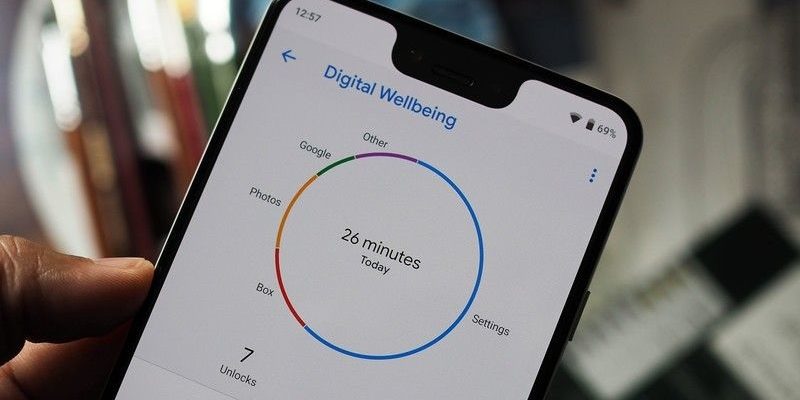
Digital Wellbeing is an approach that focuses on helping digital users to better manage the time they spend on mobile devices, the web and technology in general. It also helps us adjust technologies to our needs rather than the other way round.
Some ideas to reduce our ‘addiction’ to digital technologies
For several years, companies have realized that digital technologies have a serious impact on the physical, emotional, mental, and social health of employees. Digital impacts all aspects of our wellbeing, positively or negatively depending on how we use it. So much so that the subject was twice on the agenda of the 2020 Wellbeing @ Work Summit in Amsterdam, which I attended last week, remotely of course. Thanks to the technology! One of the sessions focused on how to build a culture of digital wellbeing. During this session, participants were encouraged to share the different strategies put in place to protect ourselves from our addiction to technologies. Here are a few ideas I have been testing for a week now, some are very simple to set up:
- Cancel your Facebook account. Okay, well, I didn’t cancel my account completely, but I watch the posts mindfully and once a week at most.
- Leave your phone and tablet out of the bedroom, you and your gadgets need a rest. This practice really works, my screen is not the last thing I look at before going to sleep nor the first thing I see when I wake up, a real treat I recommend.
- Disable all notifications from your phone (yes, all!). Give it a try, it’s worth it, even if it takes a while to deactivate them since you have to do it one by one. Start with the most intrusive ones, namely Netflix, Spotify, Amazon, and Kindle.
- Install Apps to help you take back control of your digital life and set limits with technology and social media (eg Thrive away). Yes, it may sound ironic to add a technological tool to help reduce the harms of technology.
- Remove color filters from your phone, to only keep shades of grey. Brightly colored LCD screens stimulate parts of our brain that can trigger addiction. In nature, bright colors mean objects of interest, and our brains are drawn to bright colors. Try changing your phone’s setting to black and white, and you will see the effects this will have on your usage time. I admit it, I’m still getting used to it, it feels like I’ve been in mourning since I put this strategy in place. However, I have kept my screen with grayscale for over a week now and it seems to be working in terms of reduced usage.
- Watch The Social Dilemma, a documentary-drama exploring the dangerous human impact of social networking, with tech experts sounding the alarm on their own creations. I bet you will think twice before offering a tablet to your 10 years old daughter, and you might even put your phone away for at least a few hours…
So yes, if you decide to follow all the above strategies, you may be suffering from FOMO (Fear Of Missing Out). When you listen so much to “the others”, or the “best” experienced by others, you lose the sense of who you really are. Here are wise words that might help you with this, remember that comparing your life with others’ is, according to Buddha, the thief to joy.
What does digital wellbeing mean in an organisation?
When we realized that employees were no longer disconnected, that emails were circulating 24 hours a day and that this had a real impact on the wellbeing of the workforce, organizations started to define rules concerning sending of emails, and even cut off the mail servers outside office hours. Volkswagen was one of the first companies to launch the movement in 2012, to stop the “always on culture”. They were followed by Daimler, still in Germany, who decided that all emails received during the holidays would be automatically deleted and the sender would be asked to find another recipient in the absence of the original recipient.
I’m not sure all organizations should impose such measures to allow employees to disconnect from work. But when we see the impact that digital overload has on our mental, physical, social and emotional health, there must be something we can do to improve digital wellbeing. Indeed, as stated in a report by Bank Workers Charity (BWC), too much technology has an impact, among other things, on:
- Sleep: 47% of adults find it difficult to fall asleep or have a disturbed sleep due to excessive internet use;
- Computer vision syndrome (or digital eye strain): the computer vision syndrome describes a group of eye- and vision-related problems that result from prolonged computer, tablet, e-reader and cell phone use. This syndrome is one of the main occupational health hazards of the 21st century (symptoms are headache, blurred vision, neck and shoulder pain, and dry eyes);
- Sedentary lifestyle: no need to explain this one, we all know the impact that screens have on physical activity;
- Communication: intensive use of technologies prevents communication based on understanding body language, tone of voice, facial expressions and increases conflicts due to poor or false understanding of the other;
- Productivity: digital overload reduces our productivity by 40%;
- Stress and anxiety: both increased by digital overload;
- Psychological disorders: the average age of the first symptoms of depression was 45 in 1960, it is 14 now! The correlation between intensive use of technology and psychological disorders is very clear;
- Blood pressure and heart rate: smartphone users see their parameters increase significantly;
- Suicide: Heavy usage of social media is strongly correlated with suicide rates, especially among young women. The same goes for cases of cyber harassment that have led to suicides among teenagers, even very young adolescents.
Different strategies to increase your employees’ digital wellbeing
But it’s not all bad, far from it. More and more organisations are integrating aspects of digital health into their overall wellbeing strategy. The awareness is there, especially since the arrival of COVID-19. Now that there are hardly any boundaries left between professional and private life, that the office is installed in the living room and that children participate in teleconferences, sometimes on purpose but often rather by lack of alternatives for parents, digital well-being is becoming a central concern of many HR managers. Here are some ideas for including digital health aspects in your wellbeing strategy:
- Develop a clear policy regarding the use of technologies
This policy should contain rules concerning daily breaks away from screens, such as with this organisation that strongly recommends full disconnection between 12pm and 1pm, and offers Friday afternoons free of Zoom / Teams / Skype meetings, live chat, instant messaging or even emails.
France went even further with this. In 2016, the French government launched the right to disconnect policy. Such practice should encourage organisations to define guidelines offering employees the choice and the right to disconnect outside office hours, on weekends and on vacation.
- Encourage employees to put up their own barrier
Common sense strategies listed at the beginning, like turning off notifications or a ritual like observing a digital Sabbath or a digital detox, don’t go far enough to help employees regain control of their digital behaviours. What they rather need is a thoughtful method of deciding which tools to use, for what purpose, and under what conditions. They will then be able to stop being the product of their devices and will become again the users of their devises, as the professor of computer science and author Cal Newport recommends in his latest book “Digital Minimalism: Choosing a Focused Life in a Noisy World ”.
Organisations can help their people relearn what their goals are, and use technology only to achieve them, intentionally and consciously. For example, one organisation removed online collaboration support apps such as Trello and Slack from employees’ phones. Such initiative can help employees feel freer to set up their own technological barrier.
- Help employees connect with what really matters to them
Establish “digital detox” days and encourage employees to share their experience after such a tech-free experience. This kind of strategy allows everyone to feel how difficult it is to completely disconnect from technology, to experience something intense as a team, to reconnect with what really matters. Being able to then share feelings as well as emotions with colleagues allows everyone to connect in a different way than through everyday work.
No one can predict precisely what the digital revolution will continue to bring to the world. As with all previous revolutions (steam, train, electricity …), most of us probably think that we are making too much of a fuss on the subject, that there is a lot of panic and stress for no reasons. It may take a while, but it will blow over, and we will return to the world that will emerge as a better place. However, there are two significant differences from previous revolutions: speed and volume. These two elements are essential attributes to these new digital technologies. Data and information, true or false, travel so much faster and in much larger volumes, that it implies a structural break with the past. We can no longer compare this revolution to the previous ones, and we must better prepare ourselves for the present and future changes: not to drown in the coming tsunami, but to surf on that big wave.
To offer digital wellbeing to employees, we need to remember that each progress is a double-edged sword, and we must proceed with caution, intention and consciousness. Technology is inherently neither good nor bad. The key is to use it to support our goals and values, rather than letting it use us.